


![]() |
|||||||||||||||||
|
|
Consider these Dietary Supplements:
ATTENTION: Any use of dietary supplements
in connection with any health condition should involve direction
from a health care professional. The U.S. Food and Drug Administration
has not approved the statements in this message. THE IMPORTANCE OF GLUTATHIONE IN NORMAL BODY FUNCTIONING “Glutathione ( g -glutamyl-cysteinyl-glycine; GSH) is the most abundant low-molecular weight low-molecular-weight thiol, and GSH/glutathione disulfide is the major redox couple in animal cells.” This quotation begins a paper by Wu and coworkers1 who summarize the many roles of GSH as follows:
These roles are restated in the following table: Antioxidant defense: Metabolism: Regulation: This remarkable metabolic and regulatory versatility plays a part in protecting an animal or human body from a variety of threats. Glutathione deficiency contributes to oxidative stress and can play a key role in aging and in the advancement of many diseases. Dietary supplementation with GSH can provide for normal body functions in many individuals, especially those whose age, disease condition, or other circumstances may contribute to glutathione deficiency. DO YOU WANT PAIN RELIEF WITHOUT SIDE EFFECTS? Most common pain remedies are synthetic chemical compounds, some found in nature and some related to natural products. They function by inhibiting the formation of two enzymes COX-1 and COX-2. Relief from pain comes from the COX-2 inhibition. On the other hand COX-1 protects the stomach lining, promotes good kidney function and promotes other desirable body functions. Thus, most pain remedies on the market have some unwanted side effects. Several kinds of inflammation can afflict the musculoskeletal
system of each human body. These include: back and neck pain,
cramps, pulled muscles, tendinitus, repetitive strain disorder,
bursitis, fibromyalgia, and sprains. If the COX-2 enzyme is inhibited,
painful inflammation can be minimized. Some pains are chronic,
others can be traced to a particular incident. Sooner or later
almost everyone will take any of a number of pain remedies can
get relief from the pain.
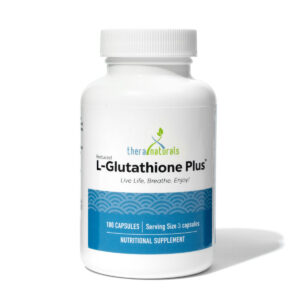
If your good health depends on balancing hormones in your system, you may greatly benefit by using dietary indoles. These vegetable nutrients effectively, but safely and gently, guide hormone metabolism. You can get dietary indoles from us here at Theranaturals. You might want to! You probably have questions. If they concern any of the afflictions listed above, please go to the Facts page accessible by the menu on the left of this page. Reduced L-Glutathione is a tripeptide (three amino acids) antioxidant found in many cells in the human body. This supplement is finding widespread use as a dietary supplement for people. An article will soon appear in the Facts section describing this interesting product available from Theranaturals, Inc. What in the World isI3C™?
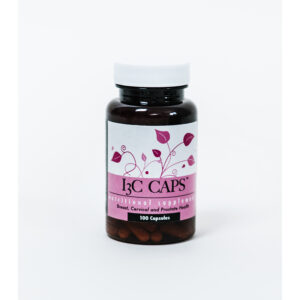
More formally called 1H-indole-3-methanol, indole-3-carbinol (I3CTM) is derived from the enzymatic hydrolysis of glucobrassicin, a glucosinolate found in cabbage, broccoli, Brussels sprouts, bok choy, cauliflower, cress, kale, mustard, radish, rutabaga, kohlrabi and such cruciferous vegetables. It is a small molecule, which is readily transformed in stomach acid to many other indole-containing substances. The significance of the oral dosing of I3CTM is that many of the same reactions can take place with the capsules of I3CTM as would take place if the person ate cabbage or Brussels sprouts. By eating such capsules one can get the same benefit as they would by eating pound upon pound of vegetables of which they might not be particularly fond. When I3CTM gets in the stomach, the acids
there make it
very reactive and it is quickly transformed to dozens of other indole compounds.
One of them is bis (3-indolyl) methane (B3IMTM) also called
diindolyl methane (DIM). Theranaturals
can furnish you with capsules containing I3CTMnamed I3CTM CAPS,
and the similar product named B3IMTM CAPS. It is not yet
clinically proven which
will work the best; most of the research has been done with I3C TM,
but there are some indications that B3IM TM
has some advantages. Future research will involve comparisons of these two
commercially available dietary indoles. Broadbent and Broadbent summarize
much of the research of the past in two review articles.2,3 WHAT HAPPENS TO I3CTM IN THE HUMAN BODY? Literally hundreds of scientific papers have been written describing work to shed light on the mechanism of the benefits of I3CTM. Some of the biochemical steps are well known, while others are not yet clear. It is well documented that I3CTM will change the metabolism of estradiol.4 A urinalysis test has been developed to show that some women taking I3CTM orally will produce, from estradiol metabolism, more 2-hydroxyestrone in place of 16alpha-hydroxyestrone, another metabolic product.4 About two-thirds of the women tested responded this way in repeated tests. Effects of Altered Estrogen Metabolism It is known that of 2-hydroxyestrone is much less estrogenic
than 16alpha-hydroxyestrone. In simple terms, the 2-hydroxy-compound discourages
cell division while the 16alpha-hydroxy-compound accelerates cell division.
That is what cancer and warts are aboutcell division. It is also
known that this variation in estradiol oxidation is governed by activation
of the cytochrome P450 A1A and related enzymes. In other words a person
eating I3CTM might set up a chain of biochemical reactions
which will activate the P450 A1A enzyme which in turn changes estradiol
metabolism. The intermediate biochemical reactions are only partly understood,
but a more detailed detailed review and discussion of estrogen metabolism
is given by Zhu and Conney.5 WHAT ARE DIETARY INDOLES? Two commercially available dietary indoles are named I3CTM and B3IMTM. Both of these chemical compounds are found in nature, particularly in the juices of cabbage, broccoli, Brussels sprouts and many other cruciferous vegetables which have similar taste and odor. Much of that taste comes from sulfur-containing compounds, characteristic of all of that family of vegetables, called glucosinolates. In the growing vegetables the glucosinolates have their own functions. The glucosinolate with which we are interested is glucobrassicin. When the vegetables are macerated through chewing, grinding, etc, an enzyme called myrosinase is released and glucobrassicin is hydrolyzed to give I3CTM. The term "dietary indoles" applies not only to I3CTM and B3IM TM , but also to the products these materials undergo in an acidic system or upon heating. Are Dietary Indoles Stable? At normal room temperatures I3CTM is stable for years and B3IMTM is even more stable. However, at elevated temperatures I3CTM will react with itself to form compounds similar to those formed in the acidic conditions of the stomach described above. Once a consumer has received either of these products, it is suggested that they be stored in a refrigerator. Further discussion of the chemistry of these materials is found in the reviews by the Broadbents.2,3 Are Dietary Indoles Safe? The use of vegetables for hundreds of years, the hundreds
of carefully observed animal studies, and the consumption of synthetic I3CTM by
thousands of people without noticeable harmful effects have shown I3CTM to
be a safe dietary supplement. When I3CTM is consumed,
whether from a dietary supplement of from a direct vegetable source, it
undergoes substantial chemical change in the stomach acids. A number of
these reaction products have been shown to be useful in the body. One
of them is B3IMTM. Most of the scientific studies which
apply to the ailments mentioned here have involved feeding the vegetables
or the dietary supplements to animals or humans. Lesions on the cervix cause pain and discomfort for many women. These lesions, if unattended, can lead to cervical cancer, the second leading cause of death for women in the world. Of course, the normal defenses of the body might cause these lesions to go away for reasons that are not immediately apparent. Few want to take that chance, so they get treatment. The recent work of Dr. Maria C. Bell6 gives significant hope for the use of I3CTM, a dietary supplement, to relieve women with this condition. More on Cervical Dysplasia> What were Dr. Bells actual results? Dr. Bell had 27 subjects, all of which had clinically observable CIN II-III, treated for 12 weeks as follows: a) 10 taking placebob) 8 taking 200 mg I3CTM per day c) 9 taking 400 mg I3CTM per day. Results: None of the placebo group had complete regression of CIN, although many had an expected decrease in severity over the 12 weeks. Of the 200 mg per day group, 5 out of 8 had a reduction and 4 had a complete regression. Of the 400-mg per day group all 9 out of 9 had a reduction in severity and 4 had complete regression. Cervical dysplasia is caused by the human papilloma virus (HPV) of which there are several different strains. Some HPV strains cause genital warts and some strains cause laryngeal papillomatosis, also called recurring respiratory papillomatosis (RRP). The scientists who study HPV have an International Papilloma Conference, which meets nearly every year. In July 2000 the meeting was held in Barcelona, Spain and about 800 people attended. In 1999 the meeting was in Charleston, South Carolina. People attending the HPV conferences are informed about the relatively aggressive HPV strains 6 and 11 which are most responsible for observable RRP and about the HPV strain 16 which is most often responsible for cervical lesions. They know that HPV-caused CIN I, II, and III, can be precursors of cervical cancer and prevention of cervical dysplasia is associated with prevention of cervical cancer.7 By the way, Dr. Bells paper was presentedand well receivedin Barcelona. LARYNGEAL PAPILLOMATOSIS
(RRP) During the last five years it has been found that dietary indoles are the most effective treatment for RRP short of surgery. A clinical study by Dr. Rosen at the University of Pittsburgh summarizes the use of I3CTM CAPS for RRP.9 Many times the people who suffer most from RRP are children. Often these children are subject to laser surgery to remove the warts from their vocal chords. It is sometimes necessary to perform this laser surgery several times per year. Some of the children using I3CTM CAPS have significantly decreased the number of laser surgeries necessary. Why do dietary indoles inhibit the growth of warts in soft tissue like the vocal chords? Warts represent unwanted cell division and cell division results from the action of estrogenic hormones. The dietary indoles modify the metabolism of hormones to make them less estrogenic. See the section on "What Happens to I3CTM in the Human Body?" Theranaturals has been a constant dependable source of I3CTM CAPS for the past five years. Theranaturals has furnished I3CTM CAPS for many of the clinical trials, which have been performed. GENITAL WARTS Both RRP and cervical dysplasia are caused by HPV and are amenable in some people to treatment with I3CTM CAPS. Since genital warts are also caused by HPV, an obvious conclusion should be that anyone with genital warts ought to try I3CTM CAPS. However, when a person has warts anywhere, the normal reaction is to ask, "What should I put on it?" That may not be as good a question as, "What dietary supplement should I take?" A number of commercial preparations are available for topical treatment of genital warts. However, a dietary supplement, I3CTM CAPS, also ought to be considered by people who have these physical manifestations of HPV. FIBROMYALGIA In the course of developing tests to detect the action of I3CTM on hormone metabolism, one of the subjects noticed that her fibromyalgia went away while she was taking I3CTM. This observation led to testing other people suffering from this debilitating condition. Soon an informal test was underway among people having fibromyalgia. Fibromyalgia is a syndrome which manifests itself in a variety of ways. It is often associated with chronic fatigue syndrome, but it is not necessarily the same. The person with fibromyalgia has pain, which interferes with sleep, with normal work functions, and with several body functions. Symptoms include non-restorative sleep, fatigue, stiffness, mood disturbance, irritable bowel syndrome, headache, parathesias, and several less general manifestations. Fibromyalgia appears to afflict between 1% and 2% of the population and 90% of the sufferers are women. The beneficial effect of I3CTM on many people who have fibromyalgia led to the granting of an U. S. Patent.10 From preliminary tests it appears that about a third of those with fibromyalgia will experience significant relief, another third will have some relief, while a final third may not have any improvement. PMS & POST MENOPAUSAL COMPLICATIONS Premenstrual Syndrome is the periodic bane of many a young womans existence. It is quite evidently a hormone-related condition which is not a diseasebut feels like one. Preliminary tests show that some women experience less troublesome periods when they take a daily dose of 100 mg of I3CTM, that is one I3CTM CAP per day throughout the month. Likewise women in early menopause find that their symptoms are less severe when they are taking a modest daily dose of I3CTM CAPS. A U. S. Patent has been granted!! Clinical trials are anticipated. PREVENTION OF BREAST CANCER Attention was first drawn to I3CTM through the observation that during the Second World War there was a dramatic drop in breast cancer among the women of Europe. One of the possibilities explored was that the diet of European women at that time included larger amounts of cruciferous vegetables (cabbage, broccoli, etc.) than before or after the War. It was also observed that the women of China and Japan consume more cruciferous vegetables than American women, and they have less breast canceruntil they move to America and adopt the American diet. Careful investigation has led to a conclusion that important benefits of eating these vegetables center around a set of chemical compounds called dietary indoles, derived from the reactions of I3CTM in the digestive system. As a consequence of these observations dozens of papers have been published showing that mice and other animals dosed with breast cancer and other cancers (including cervical cancer and endometrial cancer) will resist those diseases when they are fed I3CTM. In fact, most of the studies on I3CTM have been directed toward cancer prevention. Systematic studies are overwhelming in the conclusion that at least some of the breast cancer of the world can be avoided by increased consumption of I3CTM and related dietary indoles. Human clinical trials have not been run on the treatment of actual cancer with I3CTM CAPS, and we certainly do not suggest that application. However, a number of interesting studies along these lines are presently being reported. A group at the University of California, Berkeley, has developed evidence that I3CTM by itself will arrest cancer cell growth.12 This effect is independent of the alteration of estrogen metabolism mentioned in the section titled "What Happens to I3CTM in the Human Body?" These workers also found a synergistic effect between I3CTM and tamoxifen.13 REFERENCES
2. Broadbent, T.A., and Broadbent, H.S., 1998, Current Medical Chemistry, 5, 337-352 3. Broadbent, T.A., and Broadbent, H.S., 1998, Current Medical Chemistry, 5, 469-491 4. Michnovicz. J. J. and Bradlow, H. L., Chapter 23 in Huang, M-T, et al., 1994, Food Phytochemicals for Cancer Prevention I, Fruits and Vegetables, ACS Stnoisuyn Series 546, American Chemical Society, Washington D.C., 282-302 5. Zhu, B.T., and Conney, A.H., 1998, Carcinogenesis, 19, (1) 1-17 6. Bell, M. C., et al., 2000, Gynecologic Oncology, 78 (2), 123-129 7. Newfield, L., 1993, Anticancer Res.,, 13, 337-342 8. Coll, D. A., et al., 1997, AM. J. Otolaryngology,, 18 (4), 283-285 9. Rosen, C. A., et al., 1998, Otolaryngol Head Neck Surg., 118(6), 810-815 10. Arffmann, K, et al. U. S. Patent 5,895,787 11. Ellenberger, S, et al. U. S. Patent 6,613,792 12. Cover, C.M., 1998, J. of Biol. Chem., 273 (7), 3838-3847 13. Cover, C.M. et al., 1999, Cancer Research, 59, (March 15) 1244-1251 |